
The Regenerative Strategist
Welcome and thank you for reading The Regenerative Strategist. A weekly update on harnessing the power of decarbonization, digitization, and enhanced data collection, delivering buildings of the future powered by renewable energy & automation.
Want to stay informed?
Subscribe to this series using the button above and let us know what you want to hear about next week using #UrbanAO in the comments below.
Introduction
Architecture used to start with a site. In 2026, it starts with a supply chain.
Not because architects suddenly became freight nerds, but because the world forced the issue. Carbon rules are hardening into procurement gates. Trade policy is acting like climate policy. Shipping routes are behaving like geopolitics. Commodity spikes are showing up as HVAC lead times, electrical package surprises, and budget volatility. The old assumption that materials will simply arrive if you pay the invoice, is fading. What replaces it is more operational:
Can you source it, can you prove it, can you deliver it?
That is what “Build Where the Materials Are” really means. Not that we all move closer to quarries or forests, but that construction is reorganizing around basins. Regions where clean power, manufacturing capacity, logistics, and documentation actually align. Inside those basins, projects move with fewer surprises. Outside them, you can still design anything, but every major package becomes a negotiation with distance, carbon exposure, schedule risk, and paperwork that now has teeth.
The punchline is that this is not just a sustainability story. It’s a buildability story.
Developers and diligence teams now ask questions that used to sound exotic. Where does the steel come from? What is its verified footprint? If a border rule tightens midstream, what breaks first, the budget or the schedule? If a shipping lane gets disrupted, what is the substitute path? These questions decide whether a project stays elegant on paper or turns into a slow motion procurement crisis.
This week’s edition is a field guide to the new map. We are not doing a “materials 101” tour. We are looking at the forces that make materials behave like borders, like currencies, like bottlenecks, and sometimes like leverage. 🧭📦⚡
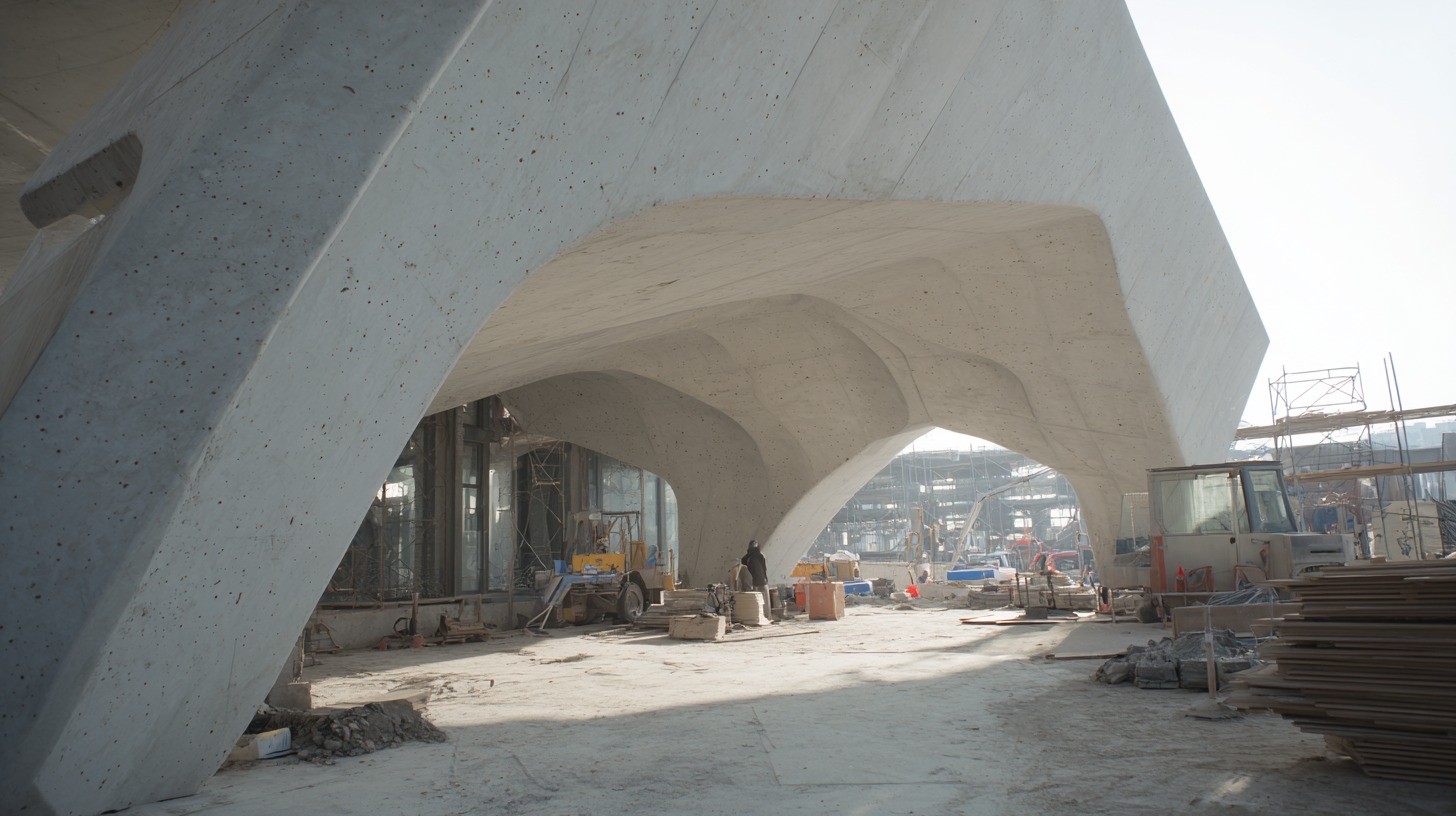
1️⃣ Carbon Borders: When Embodied Carbon Becomes a Price Tag 💶🧾
For years, embodied carbon lived in PDFs and conference panels. In 2026, it moved into customs systems.`
The EU’s Carbon Border Adjustment Mechanism did not “launch” in a conceptual way. It entered into force on January 1, 2026, with the plumbing integrated into EU customs workflows and the CBAM Registry. That matters because CBAM is not a pledge. It is an enforcement mechanism. If you import covered materials into the EU, the carbon content becomes part of the commercial reality, not a sustainability sidebar.
Here is the strategic twist. CBAM quietly converts the global materials market into two categories:
(A) Materials with verifiable, defensible carbon data, and
(B) Materials that get treated as suspicious by default.
If a supplier cannot back up emissions with credible, product specific EPD logic and documentation, the importer absorbs risk. If the supplier can, the material becomes “financeable” in carbon terms. This is why the phrase “technical stamp of reality” is no longer just about structure or MEP. It now includes carbon accounting.
Now zoom out. Europe is not the only actor turning carbon into a cost line. The U.S. is doing it through procurement leverage. Federal and state governments collectively procure almost 50% of cement and 20% of steel used in the United States. That is not symbolic purchasing power. That is market making. And the rules are increasingly explicit.
The U.S. General Services Administration has formalized IRA Low Embodied Carbon requirements and thresholds, tying funding eligibility to documented carbon performance via Type III EPDs. California’s Buy Clean framework requires EPD submissions for key product categories and updates GWP limits on a schedule. New York’s Buy Clean Concrete program similarly pushes EPD based requirements into state procurement, with defined project thresholds.
So the economic signal is getting sharper on two fronts at once. Border policy in the EU, procurement policy in the U.S. Same result, the carbon intensity of materials now behaves like a shadow tariff, sometimes literal, sometimes structural.
You can see the pressure in the steel story playing out right now. China’s 2025 crude steel output fell to a seven year low, yet exports hit a record above 119 million tonnes, with a notable shift toward flat products and a drop in rebar share versus prior years. That export wave is not landing in a neutral policy environment. It is triggering more trade barriers, and it is arriving just as carbon based barriers harden in Europe. The point is not “China bad” or “Europe strict.” The point is that construction materials are becoming geopolitically priced.
And if you are a developer, this changes your risk model. Delivered cost is no longer just:
Base material cost + freight.
It increasingly becomes:
Base cost + freight + compliance friction + carbon exposure.
That last part is new enough that many teams still treat it as optional. It is not optional if you are building across jurisdictions, raising institutional capital, or even just trying to avoid a procurement surprise six months into DD.
What does this do to design strategy? It creates a new kind of “site constraint,” even before the site plan. The smartest teams are starting to pre qualify projects by their materials basin:
A port and rail corridor that can actually move bulk reliably, suppliers that can produce EPD backed products at scale, and a regulatory environment where the paperwork does not become a schedule killer.
This is why the 2026 playbook is quietly shifting from “value engineer later” to “source constrain early.” You do not want to be in schematic design arguing about an imported facade system when the carbon documentation does not exist, or when the carbon cost flips the economics overnight.
This is also why EPDs are becoming a competitive weapon. Not because everyone suddenly fell in love with data, but because EPDs turn uncertainty into something finance teams can underwrite. The material with clean documentation moves faster through diligence. The material without it becomes a narrative risk, a compliance risk, and increasingly a pricing risk.
In other words, carbon policy is not “affecting architecture.” It is re ordering the supply chain, and architecture is downstream from that re ordering.
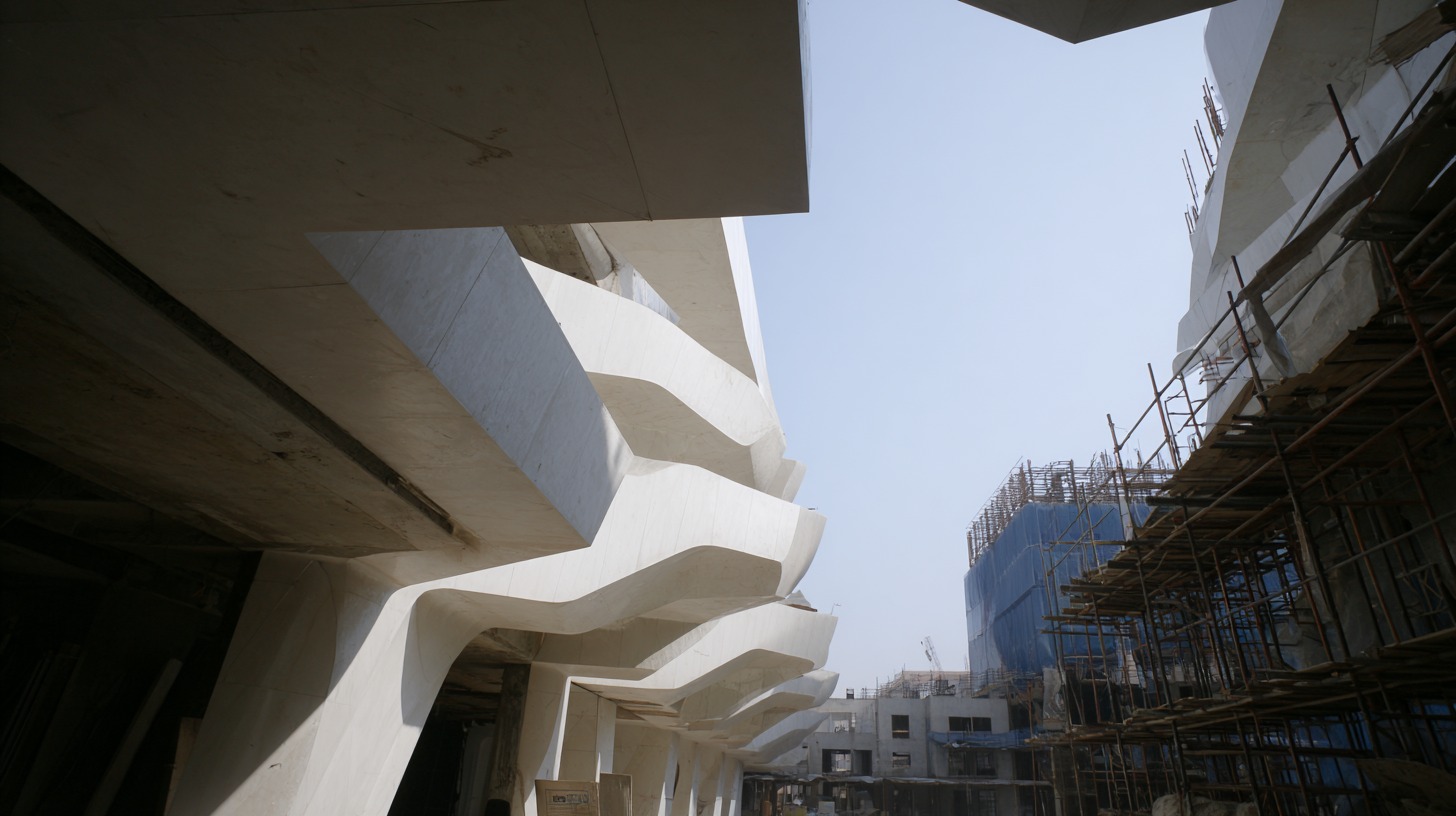
2️⃣ The Carbon Map is a Logistics Map: chokepoints, ports, rail, and “accidental” extra miles 🌍🚢🚆
We used to treat distance like background noise. A project was “local” if the site was local. Materials were “available” if a spec sheet existed. That mental model died quietly, somewhere between drought, drones, insurance clauses, and port queues.
In 2026, distance is no longer geography, it is geoeconomics. Not as a metaphor. As a line item.
Here is the underappreciated shift: global trade volume can grow slowly, while the work the system must do grows fast. UNCTAD’s latest shipping data shows seaborne trade measured in ton miles jumped 5.9% in 2024. That is roughly three times the growth rate of trade volume. Same stuff, longer paths. The planet did not move. Routes did.
That one metric should make architects sit up straight, because embodied carbon does not care about your intent. It cares about how far and how often mass moves, and whether it moves by truck, rail, or ship.
Now zoom into the “why”.
The Suez story is not just geopolitics; it is a design variable. When Red Sea risk spikes, shipping does not stop, it detours. Those detours are not poetic. They are 7 to 10 extra days for many Asia to Europe routes, and 10 to 14 extra days into parts of the Mediterranean. That delay is not just schedule pain. It is inventory buffering, idle capital, and often, air freight for the things that panic. It is also more fuel burned for the same delivered ton.
And the knock-on effects are measurable. Container freight rates did what they always do when the network gets pinched. They jump, then they whip around like a loose power cable. The Shanghai Containerized Freight Index averaged 2,496 points in 2024, up 149% year on year, and it spiked to 3,600 mid-year. That is not a shipping trivia fact. That is the hidden tax on façade packages, MEP components, specialty glass, and every “just in time” assumption baked into a construction schedule.
Then there is the climate side of the same coin.
The Panama Canal is a climate story disguised as logistics. During the worst low-water period, daily transits were reduced from about 36 to 22, with plans announced at the time to step down further. Different corridor, same lesson. The physics of water levels can rewrite the economics of routes. If your material strategy depends on a cheap, stable passage between oceans, you are not designing a building. You are designing a bet.
All of this would be merely chaotic if it did not translate into carbon accounting. But it does.
Take the cold arithmetic of emissions intensity per tonne-kilometre. Using standard government conversion factors, a rough order of magnitude looks like this:
A diesel HGV can sit around 0.20 kg CO₂e per tonne-km on an average laden basis. Rail freight is closer to 0.028 kg CO₂e per tonne-km. Large container ships can be around 0.013 to 0.016 kg CO₂e per tonne-km, depending on size and assumptions.
So here is the twist that most organizations miss: the last few hundred kilometres can outweigh the last few thousand if you get mode choice wrong. “Imported” is not automatically high carbon. “Local” is not automatically low carbon. The decisive question is often: Did you put weight on trucks because rail access was missing, unreliable, or politically blocked? Did you lock yourself into a port with chronic congestion? Did you force a material into a route that is one incident away from doubling distance?
This is the new geography of architecture. The map is not countries. The map is corridors, capacity, and fragility.

3️⃣ Energy is the New Quarry: why clean power is reorganizing “where materials happen” ⚡🏭🗺️
We used to buy materials as if they were neutral objects. In 2026, every ton arrives with a hidden passport: what grid powered it, what fuel cooked it, what route moved it.
That is why the new geography is not “where the stone is.” It is where the clean energy is, and whether heavy industry can plug into it fast enough to scale.
Here is the core shift: for many foundational materials, embodied carbon is now mostly an energy story.
- Aluminium is the cleanest example. A major industry factsheet estimates that 59% of emissions in primary aluminium production (mine to cast house) come from electricity generation. If the smelter sits on coal power, your façade system inherits that carbon. If it sits on hydro, solar, or wind, the same façade suddenly becomes a different product, in carbon terms.
- Steel is following the same logic, even when it still looks like “steel.” Electric arc furnaces lean on electricity. Hydrogen-based reduction leans on electricity twice, once to make the hydrogen and again to run the plant.
What happens when you connect those dots? You get energy-material hubs. Clusters where renewables, processing, and export logistics live in the same neighborhood. These hubs create build basins, regions that can deliver low-carbon materials with fewer surprises, fewer excuses, and better documentation.
Two signals worth watching:
1) Northern Sweden, where steel is being rebuilt around electricity and hydrogen.
Stegra’s Boden project is not interesting because it is Scandinavian. It is interesting because it is a full-stack industrial system: large-scale electrolysis, direct-reduced iron, and electric arc furnaces designed to produce steel with dramatically lower emissions. Public reporting points to operations beginning in the second half of 2026, with planned output around 2.5 million tonnes per year, and a project configuration that includes 700 MW of electrolyser capacity and 2.1 Mtpa of DRI. This is what a new basin looks like: clean power plus integrated industry plus routes to market.
2) Port-based industrial zones, where logistics and clean power fuse.
Sohar in Oman shows the other model: a port and freezone pulling hydrogen projects into the same ecosystem as metals. A public case study describes a 35 MW electrolyser combined with solar power as an early stage move. The strategic logic is simple. If your basin has the port, the power, and the industrial land, it can become a supplier of low-carbon molecules and low-carbon materials to multiple regions.
Now add one more layer. This is not only about “cleaner materials.” It is about procurement confidence. When power is clean and traceable, carbon claims become defensible. That changes who can sell into strict markets, who can win public work, and who can survive diligence.
Here is a quick, slightly ruthless self-test for project teams 👇
If you are scoping a project in 2026, ask:
- Can my major packages be sourced from a clean-power basin?
- Can suppliers provide credible documentation without improvising?
- Is there a realistic transport path that avoids turning the last 300 km into an all-truck carbon tax?
- If the “preferred” material fails, do we have a substitution path that does not trigger a redesign?
If those answers are fuzzy, you are not just exposed on sustainability. You are exposed on schedule, pricing, and investor confidence.
The big takeaway: clean energy is no longer only a building operations question. It is increasingly a buildability question. The world is reorganizing where materials happen, and architecture is downstream from that reorganization.
4️⃣ Electrification pulls buildings into critical minerals: the hidden hardware that decides what gets built ⚡🔌🧲
The loud story is electrification. Heat pumps, EV charging, rooftop solar, batteries, smarter buildings, all electric everything.
The quiet story is what electrification physically requires. Not slogans, hardware. Copper, transformers, switchgear, wire and cable, and a weird cast of metals most real estate teams never wanted to learn, like neodymium for high-performance magnets.
In 2026, this is the uncomfortable truth: a “net-zero ready” building is not just an energy concept. It is a materials intensive machine that competes for the same inputs as grids, EVs, and data centers.
The copper problem is not theoretical 🧵
Copper is the conductor of modern life, and the numbers now look like strategic planning, not market forecasting. One major 2026 study projects global copper demand rising from 28 million tonnes per year in 2025 to 42 million tonnes by 2040, a 50% jump. The same work warns of an annual supply gap over 10 million tonnes by 2040 if mining and recycling do not scale.
That gap changes the posture of buyers. You can see it in corporate behavior. Big infrastructure consumers are starting to secure copper access through long-term deals and partnerships. Not because they love mining, but because they hate uncertainty.
For buildings, the practical impact shows up as cost volatility in electrical packages and MEP equipment. Copper pricing does not just hit raw wire, it ripples into motors, transformers, switchgear, and anything with coils.
The transformer bottleneck is the new “lead time shock” 🔥
Most teams still treat grid interconnection and service upgrades as a permitting side quest. In 2026 it is often the critical path.
Transformer shortages have gone from annoying to structural. Recent industry reporting puts average U.S. delivery times in the second quarter of 2025 at 143 weeks for generation step-up transformers and 128 weeks for power transformers. That is not a typo. It is measured in years. Separate analyses show switchgear and pad-mount transformer lead times rising quarter by quarter, with switchgear around 44 weeks in Q2 2025.
Even if your project is not in the U.S., the signal matters globally. These are not niche components, they are globally traded industrial products tied to the same raw materials, manufacturing capacity, and backlog dynamics. If you are building anything that triggers a utility upgrade, the material reality of the grid becomes your reality too.
Rare earths are the “invisible dependency” 🧲
High-performance magnets sit inside efficient motors and generators, including systems that make modern buildings run. The supply chain is concentrated enough to behave like leverage. A mainstream policy estimate in late 2025 summarized the core issue bluntly: China mines over 60% of rare earths, processes over 80%, and produces around 90% of high-performance rare earth magnets. Even small trade frictions can show up as shipment fluctuations and procurement anxiety.
You do not need to be building wind turbines to care. Building electrification is increasingly a magnet story.
A quick diagnostic for project teams 👇
When you say “we are electrifying,” you are also saying:
- We need more copper than a conventional building.
- We may need a service upgrade, which means transformers and switchgear.
- We depend on long-lead items that are constrained by manufacturing capacity.
- We are exposed to critical mineral concentration, even if indirectly.
- We compete with grids and data centers for the same equipment.
So a procurement minded version of “Build Where the Materials Are” becomes something sharper:
Build where the grid hardware can actually arrive. Build where upgrades are realistic. Build where supply chains are less fragile, not because the site is morally superior, but because delivery and interconnection are part of buildability now.
None of this means every project should move next to a refinery or substation. It means the early strategy conversation needs one more layer: the hidden physical stack behind electrification. Because the building you want to design is now coupled to the industrial system that can power it, wire it, and connect it.

Closing: The new geography is already here 🧭🌍
“Build Where the Materials Are” sounds like a slogan until you watch what is quietly happening in real projects.
Carbon is turning into pricing and permission, not just reporting. Logistics is turning into risk, not just delivery. Energy is turning into a materials advantage, not just an operations story. Electrification is pulling buildings into the world of critical minerals and grid hardware, with lead times and bottlenecks that do not care about your schedule.
So the new geography of architecture is not a new aesthetic. It is a new set of constraints that reward teams who think earlier, wider, and more numerically.
If you want one useful mental model, it is this:
A project is no longer just a site with a design.
It is a node in a global system of materials, power, and movement.
That is why the smartest strategy in 2026 looks less like “pick materials later” and more like “design inside the basin.” Pick a corridor with reliable port and rail logic. Source from regions where clean power is abundant enough to make low-carbon materials scalable, not precious. Choose packages that come with documentation that survives diligence. Treat grid interconnection and long-lead electrical gear as part of concept design, not a footnote.
This is not about being purist. It is about being buildable.
And the upside is real. Teams that internalize this new map will not just reduce embodied carbon. They will reduce surprises. They will price risk more accurately. They will move faster through procurement, approvals, and capital conversations. They will deliver buildings that are not only “net-zero aligned,” but also structurally aligned with the world that has to supply them.