Skip to content
 Architecture is no longer just about space.
It is about how space performs biologically, psychologically, and environmentally.
At Urban A&O, we operate at the forefront of this shift. As a globally recognized biophilic architecture firm, we design environments that reconnect people with natural systems not as an aesthetic layer, but as a core architectural framework.
Our work is rooted in a simple but powerful principle:
When architecture aligns with nature, how occupants respond to light, airflow, materials, and spatial conditions.
Engage with the Practice
Develop a project informed by environmental systems and spatial performance, not just visual appeal.
It is a multi-layered design approach that integrates:
As modern wellness research highlights, architecture today is expected to support regulated environmental and biological conditions, not just shelter.
This is where biophilic design becomes critical.
It transforms buildings into adaptive environments that respond to human biology.
The demand for biophilic design is being driven by real-world performance needs:
Workspaces designed with natural systems show measurable improvements in focus, creativity, and cognitive function.
The global wellness economy is expanding rapidly, influencing real estate, hospitality, and workplace design at scale.
Developments today are valued not just by location but also by experience, well-being, and environmental quality.
Biophilic and sustainable architecture strategies align with long-term environmental and regulatory frameworks.
We design across a spectrum of environments where spatial performance and environmental response is central.
Get a tailored strategy based on your project, location, and goals.
Most architecture today focuses on minimizing harm.
We focus on creating a positive impact for both people and the environment.
Embodied Ecology: Designing for Mind, Body, and Environment
Our approach is rooted in the concept of embodied ecology, where architecture becomes a
medium connecting internal human states with external natural systems.
These are not independent elements; they are integrated systems shaping spatial conditions and environmental behavior.
Our design process incorporates:
• Natural ventilation and airflow variability
• Water integration for sensory and thermal experience
• Organic spatial geometry inspired by nature
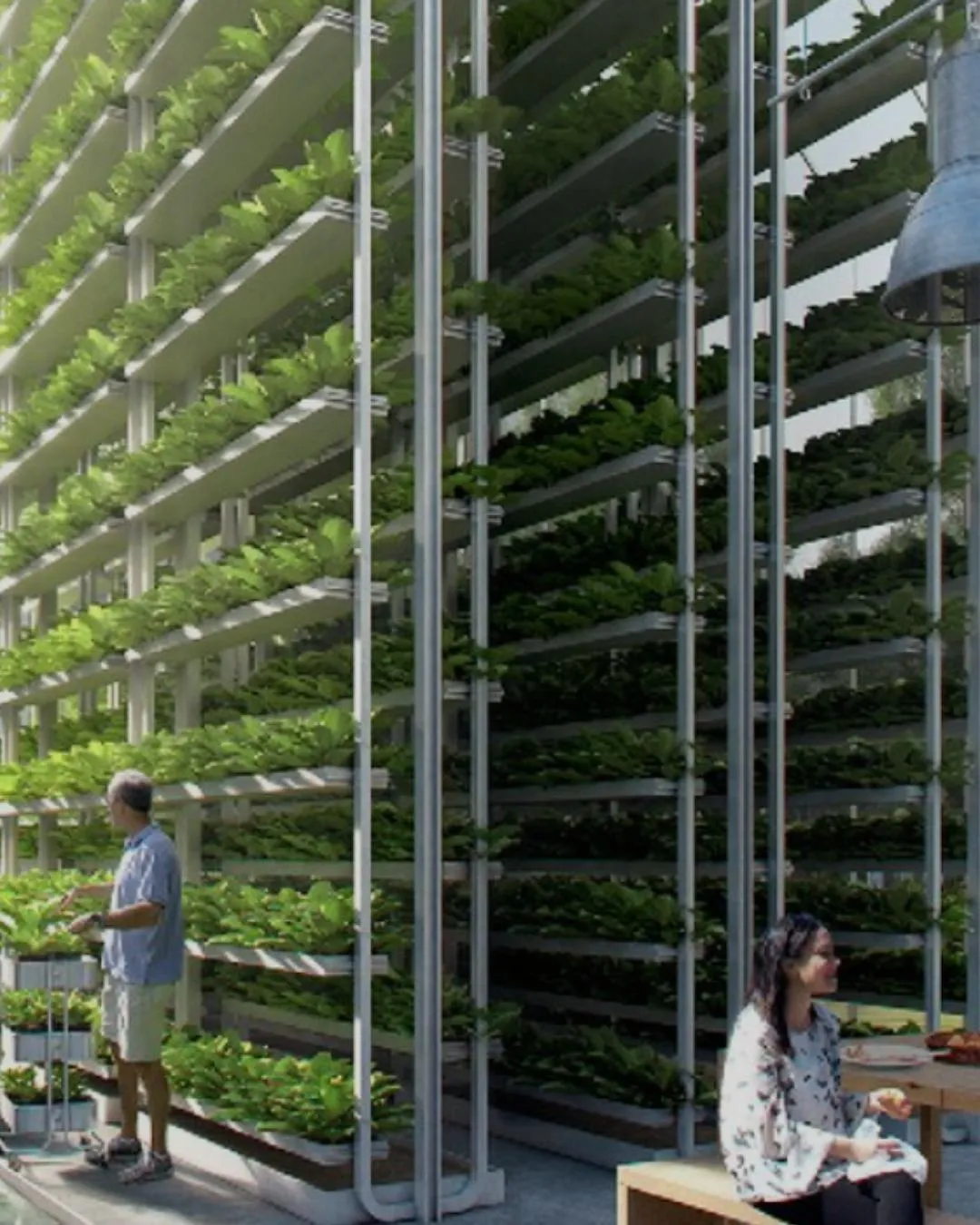
• Living walls and vertical ecosystems
• Natural material palettes
• Acoustic calm using natural soundscapes
• Strong connection to landscape and surroundings
We apply biophilic design across multiple sectors:
• Commercial & Corporate Offices
• Hospitality & Resorts
• Healthcare & Wellness Centers
• Residential & Luxury Developments
• Detox Retreats and Recovery Spaces
• Mixed-Use Urban Projects
We apply biophilic design across multiple sectors:
• Work developed through the integration of computational design, environmental
systems, and material research
• Experience working with global clients and complex projects
• Deep integration of design, technology, and environmental systems
• Focus on long-term environmental performance and spatial behavior
If your project aims to:
A biophilic architecture firm designs buildings that integrate natural systems like light, air, water, and materials to improve integrated environmental and physiological performance.
Sustainable architecture focuses on environmental impact, while biophilic architecture focuses on human experience within that environment.