Skip to content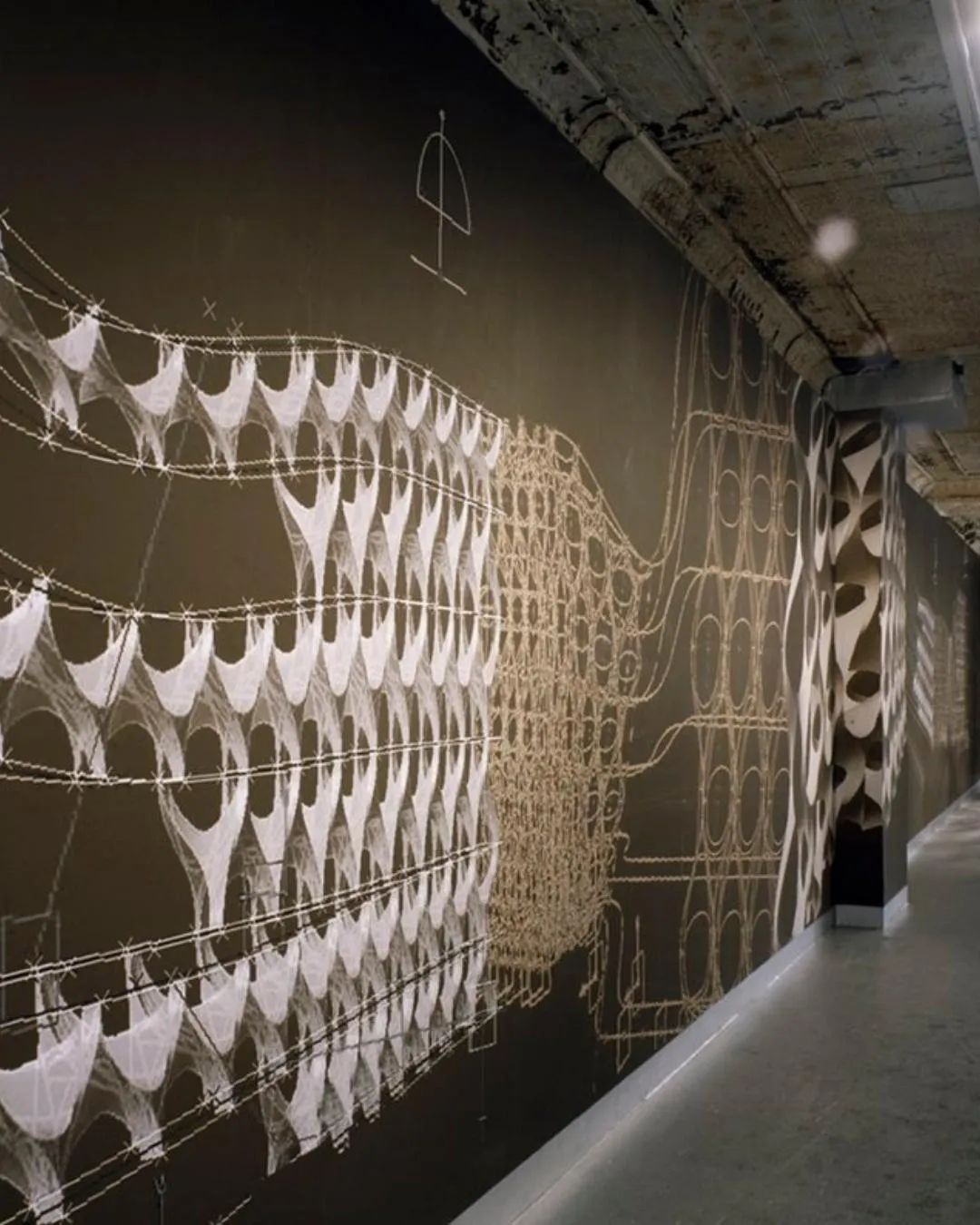
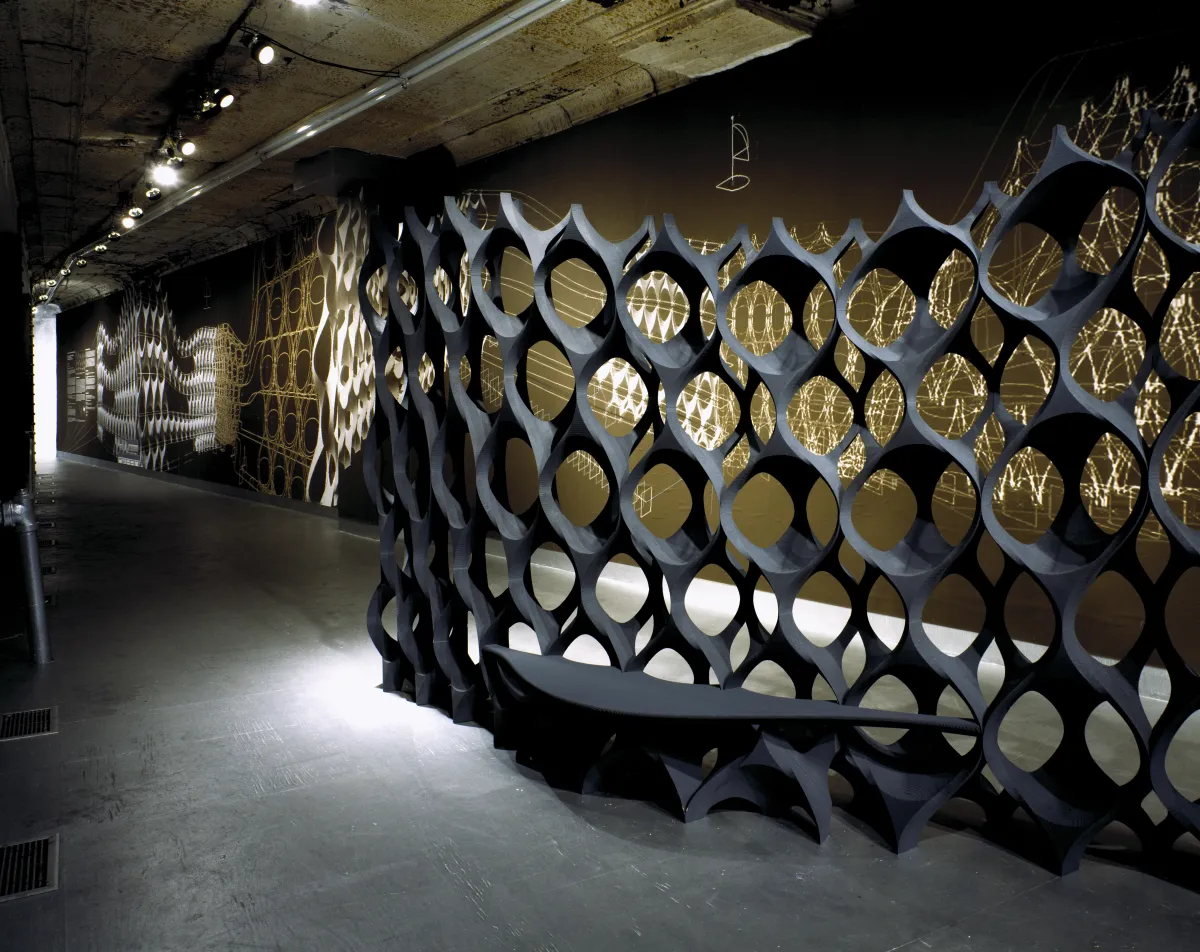
The 2004 Bone Wall marked a transformative milestone in architectural computation, establishing Urban A&O as a pioneer in advanced parametric methodologies.
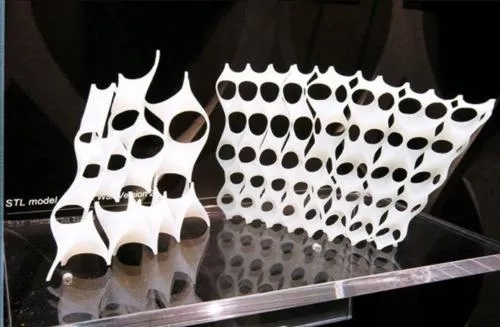
Supported by Harvard Dean Grants and inspired by Ernst Haeckel’s intricate organic forms, this project was among the earliest academic explorations of nonrecursive geometries, characterized by the absence of straight lines and the uniqueness of every cell.
At the time, Urban A&O was one of the first architectural practices to adopt CATIA—a computational platform originally developed for aerospace engineering—leveraging its capabilities to articulate complex cellular morphologies with unprecedented precision.
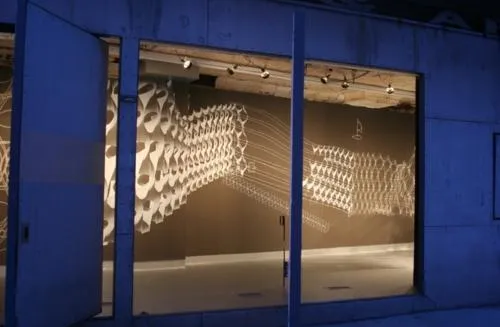
The Bone Wall was fabricated from high-density polyurethane foam using 5-axis CNC milling, producing 72 unique modules. Each module featured 18 meticulously calculated control points, formed by six upward and six downward triangular projections per half-cell.
This porous, lightweight structure exemplified material efficiency while achieving precise interlocking and advanced spatial articulation. By merging computational design, material innovation, and parametric thinking, the Bone Wall became a seminal project that defined Urban A&O’s methodological rigor and laid the groundwork for the firm’s continued leadership in architectural innovation.