Skip to content


The Circular Turn: How Retrofit and Urban Mining Will Rewrite the Rules of Construction
The Regenerative Strategist
Welcome and thank you for reading The Regenerative Strategist. A weekly update on harnessing the power of decarbonization, digitization, and enhanced data collection, delivering buildings of the future powered by renewable energy & automation.
Want to stay informed?
Subscribe to this series using the button above and let us know what you want to hear about next week using #UrbanAO in the comments below.
Introduction
Here is the pivot that should reshape how every architect, developer, and civic leader thinks about the next 25 years:
🔁 80% of the buildings that will exist in 2050 are already standing today.
💸 The circular economy in the built environment represents a 4.5 trillion USD opportunity by 2030.
🌍 Circular practices could help eliminate up to 9.3 billion tons of CO₂ emissions by 2050.
🏗️ Adaptive reuse and deep energy retrofits can reduce total carbon emissions by 50–75% compared to new construction while delivering up to 77% cost savings.
For more than a century, growth in the built environment has been equated with new projects, greenfield sites, and ever-expanding material throughput. But the math of planetary boundaries and urbanization is now forcing a different story: the next great construction boom will happen inside the buildings we already have.
The numbers are already shifting. The energy-efficiency retrofit market, currently worth about 500 billion USD, is projected to grow at 8% annually, reaching 2.9 trillion USD by 2030 and 3.9 trillion USD by 2050 to align with IEA net-zero scenarios. That growth rate is roughly double the broader construction sector’s 4% trajectory over the same period – a structural reorientation of the industry.
Materials sit at the heart of this shift. They account for roughly 60% of retrofit spending, meaning that by 2050, as the retrofit market reaches 3.9 trillion USD, materials alone will represent approximately 2.3 trillion USD in annual value. From 2023 to 2050, retrofits will demand nearly 40 billion tonnes of materials, with glass, steel, concrete, aluminum, brick, and plastics leading the pack.
At the same time, research shows that a combined circular-building and industrial-decarbonization pathway could abate 0.5–0.8 Gt CO₂ in 2030, rising to 3.4–4.0 Gt CO₂ by 2050, with cumulative avoided emissions of 4.15 Gt CO₂ by mid-century compared to business-as-usual – the equivalent of 14 times France’s annual emissions in 2022.
In other words, the retrofit economy and urban mining are no longer niche sustainability topics. They are the backbone of any credible climate, resilience, and value-creation strategy for the built environment.
This edition explores that circular turn across four dimensions:
1️⃣ The Retrofit Imperative – why value, risk, and regulation are all pivoting toward existing stock.
2️⃣ Material Recovery at Urban Scale – how cities are becoming mines for future buildings.
3️⃣ The New Material Palette – emerging low- and negative-carbon materials enabling longer lifecycles.
4️⃣ From Pilot to Practice – the policies, tools, and business models that turn circular theory into standard operating procedure.
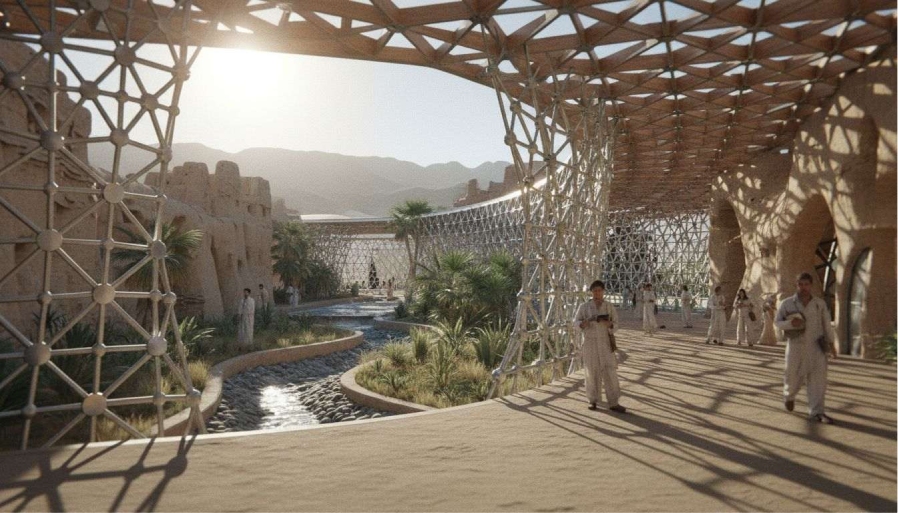
I. The Retrofit Imperative: Where the Next Trillion Comes From
1. From New Build Obsession to Retrofit Logic
The starting point for a circular built environment is disarmingly simple: build less and use what already exists more intelligently.
Recent global assessments converge on one core fact: because around 80% of 2050’s building stock is already constructed, the climate battle in cities will largely be won or lost through maintenance, renovation, and adaptive reuse, not continuous demolition and replacement.
This logic underpins four strategic circular pathways toward 2050:
-
Build Nothing New – maximize the use and lifespan of existing assets through repair, renovation, and adaptive reuse.
-
Build Efficiently – when new area is unavoidable, do more with less through space optimization and shared-use models.
-
Build with the Right Materials – prioritize low-carbon, recycled, and bio-based materials, and design for recovery.
-
Build for Long-Term Use – embed flexibility, modularity, and design for disassembly so buildings can be reconfigured instead of demolished.
Together, these pathways can reduce sector-wide emissions by up to 75% by 2050 compared to a new-build-dominated trajectory.
2. The Retrofit Market: Scale, Speed, and Geography
The 500 billion USD retrofit market is on track to reach 2.9 trillion USD by 2030 and 3.9 trillion USD by 2050, driven by net-zero targets, energy-cost volatility, and embodied-carbon regulation. Retrofits will increasingly outpace new construction in both volume and strategic importance.
The material flows behind that capital are immense:
-
From 2023 to 2030, nearly 8 billion tonnes of materials will be required for retrofits alone.
-
Between 2023 and 2050, that figure rises to nearly 40 billion tonnes.
Regional needs are highly uneven:
-
The Asia–Pacific region will require about 25 billion tonnes of materials for retrofits between 2023 and 2050.
-
Europe will need roughly 5 billion tonnes over the same period.
-
By 2030, to stay aligned with climate goals, Asia-Pacific, Europe, and North America will each need to retrofit around 3% of existing stock per year, equivalent to approximately 40 million buildings in Asia-Pacific, 8 million in Europe, and 5 million in North America.
For investors and city governments, this is not a marginal program. It is the dominant construction market of the next three decades.
3. Carbon Math: Why Retrofit Beats Rebuild
Adaptive reuse and deep retrofits preserve the embodied carbon already invested in structural frames, envelopes, and foundations, while drastically reducing operational demand.
Compared to demolishing and rebuilding, circular retrofit strategies can:
-
Cut total carbon emissions by 50–75% for a given functional program.
-
Deliver up to 77% cost savings when lifecycle costs are considered.
-
Contribute to 0.5–0.8 Gt CO₂ abatement in 2030, rising to 3.4–4.0 Gt CO₂ by 2050 when aligned with decarbonization of core materials such as cement, steel, and aluminum.
At this scale, retrofit is no longer a design “option” – it is a planetary boundary strategy. 🌍
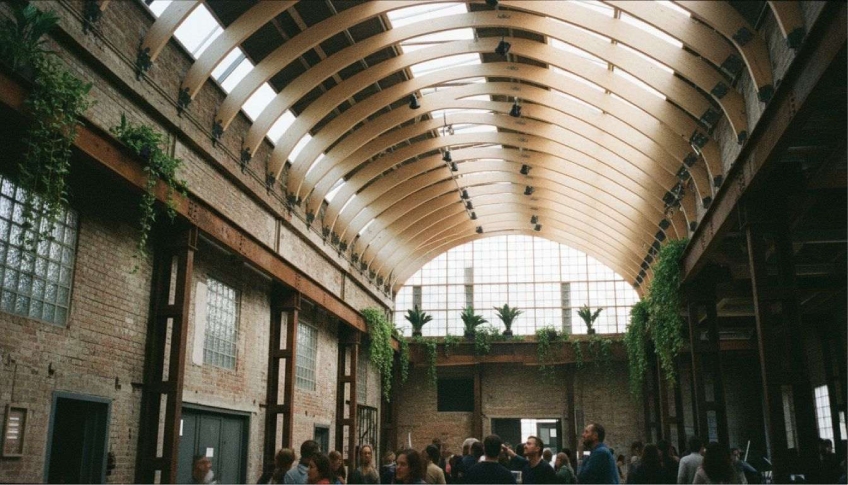
II. Material Recovery at Urban Scale: Cities as Mines, Not Dumps
If retrofit is the demand side of circularity, urban mining is the supply side – treating cities as vast, structured reserves of future materials rather than linear sinks of waste.
1. The 600 Billion USD Retrieval Opportunity
Every large-scale retrofit program generates a parallel wave of material outflow: façades, windows, partitions, services, structural elements. What happens to those flows will define whether circularity stays a slide-deck concept or becomes real.
Research shows that 50% of materials removed during retrofits between 2023 and 2050 could be recirculated, corresponding to around 600 billion USD in materials diverted from landfills in 2050 alone.
The opportunity spans multiple channels:
-
Direct recirculation – reusing components on-site or in nearby projects.
-
Aftermarket recirculation – processing and trading materials through secondary markets.
-
Material banking – cataloging and storing high-value components for future projects.
-
Urban mining – systematically harvesting materials from retrofitted and deconstructed assets.
Ignoring these flows means leaving hundreds of billions on the table while continuing to pay for landfill, extraction, and volatile commodity prices.
2. Deconstruction vs Demolition: The Carbon Case 🧩
Conventional demolition treats buildings as undifferentiated waste. Deconstruction flips that script by carefully dismantling structures to maximize recovery and reuse.
Case studies show that with proper planning and training:
-
Up to 80% of a home’s content can be salvaged through deconstruction.
-
Reuse of components avoids emissions from extraction, processing, and transport, while also reducing landfill impacts.
-
Material resale and reuse can meaningfully offset higher labor costs, especially for high-value components like timber, brick, metals, and fixtures.
A Stanford University deconstruction pilot, for example, demonstrated the potential to divert around 390,000 pounds of material and 68,000 kilograms of CO₂ by reusing windows, doors, fixtures, lumber, and concrete instead of landfilling them.
Beyond carbon and cost, deconstruction generates more local jobs across dismantling, sorting, refurbishment, logistics, and resale compared to highly mechanized demolition. That makes it a powerful engine for just transition and local economic development. 💼
3. Material Passports and Digital Twins: Making Matter Legible 📱
Circularity fails when stakeholders simply don’t know what is in their buildings.
Material passports address this gap. These digital records capture the composition, origin, embodied carbon, performance data, and circularity potential of products and components.
Recent work synthesizes eight key recommendations for passport adoption:
-
For existing buildings:
1️⃣ Prioritize reuse of the whole building where possible.
2️⃣ Conduct pre-redevelopment and pre-demolition audits.
3️⃣ Prefer deconstruction over demolition.
4️⃣ Prepare a detailed deconstruction and recovery plan. -
For system standardization:
5️⃣ Establish clear standards for data formats and interoperability between databases.
6️⃣ Produce passports linked to lifecycle phase (existing, proposed, completed).
7️⃣ Use consistent classification systems (e.g., Uniclass).
8️⃣ Integrate passports with BIM for spatial analysis and lifecycle tracking.
Enabling technologies are already in the market:
-
Blockchain and NFT systems to ensure authenticity and traceability across multiple ownership cycles.
-
Platform-based registries that support circularity calculations and urban-mining analytics.
-
QR codes and RFID tags embedded in components and tied to databases tracking recycled concrete and other material flows.
-
BIM-linked passports that allow planners to generate building circularity passports with a single click, then iterate on product selection until performance targets are met.
When combined with digital twins, these systems turn buildings into dynamic material banks, where value, carbon, and risk can be monitored in real time and leveraged in procurement, finance, and design.
4. Circular Logistics: Matching Supply and Demand in Time and Space
Capturing the 600 billion USD recirculation potential is not just a design issue; it is a logistics and market design problem.
Key enablers include:
-
Demand-side mapping – real-time visibility into projects seeking secondary materials.
-
Material futures trading – contractual mechanisms that value the residual material content of buildings before they are deconstructed.
-
Collaborative ecosystems – partnerships spanning suppliers, contractors, demolition firms, designers, and asset owners.
-
Standardization and classification – harmonized data so components from one project can be quickly matched to another.
As material-flow transparency increases, cities begin to function less like one-way consumption machines and more like circulating material metabolisms. 🔄
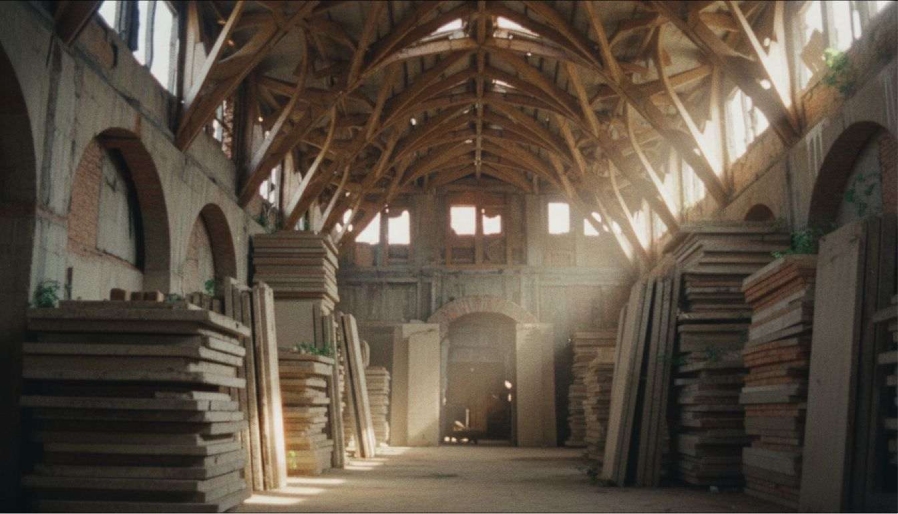
III. The New Material Palette: Building for 200 Years, not 20
Circularity is not just about where materials go at end-of-life; it is also about what those materials are and how long they last.
Recent innovation has expanded the palette of materials that support longer lifecycles, lower embodied carbon, and easier recovery.
1. Self-Healing Concrete: Extending Lifespan to 200 Years 🧬
Concrete remains the most widely used building material on Earth, and conventional production is a major driver of emissions. Yet circular strategies suggest that 96% of concrete and cement’s embodied CO₂ could be abated by 2050, combining industrial decarbonization with circular loops.
One of the most promising levers is self-healing concrete.
Self-healing systems use mechanisms such as:
-
Bacterial healing – encapsulated Bacillus species that precipitate calcium carbonate when activated by water, sealing microcracks from within.
-
Superabsorbent polymers (SAPs) – hydrogels that swell on contact with water and physically block cracks.
-
Microcapsule systems – tiny capsules that release healing agents when cracks form, then polymerize or crystallize to repair the damage.
Pilot projects have shown that such concretes can heal repeated cracking events and extend service life to up to 200 years, while enabling reductions in reinforcement steel (for example, a Dutch project that cut horizontal reinforcement by 35%).
This longer lifespan directly supports circular transformation by:
-
Reducing the need for major structural repairs and replacements.
-
Lowering cement demand over time – a crucial lever in climate mitigation.
-
Decreasing the volume of demolition waste across the century-scale horizon.
2. Transparent Wood: Rethinking Glazing and Envelopes 🌲✨
Transparent wood reimagines a familiar material. By removing lignin and infusing a transparent polymer, researchers have created a composite that is:
-
3–5 times stronger than traditional wood.
-
More thermally insulating than glass.
-
Weather-proof and more fire-resistant than the base timber.
-
Optically transparent while retaining structural capacity.
Work at KTH Royal Institute of Technology and other labs is exploring smart-window applications where transparent wood can change optical properties under electrical current, embed quantum dots for efficient LEDs, or integrate phase-change materials to absorb and release heat.
For circular construction, transparent wood offers a path to high-performance façades that both store biogenic carbon and reduce operational loads, while remaining compatible with design-for-disassembly strategies.
3. Hempcrete and Bio-Composites: Carbon-Negative Envelopes 🌱
Hempcrete, a composite of hemp shives, lime binder, and water, is emerging as a flagship carbon-negative envelope material.
Key characteristics include:
-
Negative carbon footprint – hemp sequesters CO₂ during rapid growth, and the cured composite continues to store carbon over its life.
-
Excellent thermal and acoustic insulation.
-
High moisture buffering capacity and breathability, reducing mold risk and improving indoor air quality.
-
Lightweight performance – roughly one-seventh to one-eighth the weight of concrete, making it ideal as infill in timber frames or for retrofits.
While hempcrete is not load-bearing, it is already used in walls, floor slabs, and roof insulation, particularly in projects that pair timber structures with vapor-open envelopes.
Other bio-based innovations include hemp filaments for 3D printing, which offer lower embodied carbon compared to petrochemical-based polymers while maintaining sufficient strength for certain building components.
4. Recycled Plastic Bricks and Hybrid Composites 🧱♻️
Plastic waste valorization is moving from experimental art projects into serious building products.
Examples include:
-
RESIN8 – a hybrid mineral-polymer aggregate that can incorporate mixed plastic waste (resins 1–7) via a proprietary carbon-negative process, then be used in concrete-like products.
-
OrangutanWall bricks – interlocking polymer-composite bricks with compressive strengths around 29.7 MPa, produced through carbon-negative manufacturing.
-
Ecobricks – densely packed plastic bottles functioning as plastic sequestration devices, preventing degradation into microplastics and greenhouse gases over their service life.
These systems support:
-
Diversion of difficult-to-recycle plastics from landfills and oceans.
-
Localized production of modular elements suitable for informal construction or temporary structures.
-
Reduced demand for virgin aggregates and binders in certain applications.
If designed with modularity and reversibility, these components can be recovered and reprocessed multiple times across building lifecycles.
5. Carbon-Negative Bricks and Mineral Reuse 🧱🌍
The N10 Negative Carbon Brick, developed via Earth4Earth Technology, exemplifies how excavation soil can be turned into structural products.
These bricks:
-
Capture around 0.178 kg of CO₂ through natural carbonation over their lifecycle.
-
Are fully recyclable – they can be crushed for new bricks or returned to soil for agriculture.
-
Are produced without fossil fuels in the binder and compressed at room temperature rather than fired.
-
Achieve frost resistance (F2) and long-term structural stability
By displacing conventional fired bricks, such systems offer large embodied-carbon savings while valorizing soil that would otherwise be treated as waste.
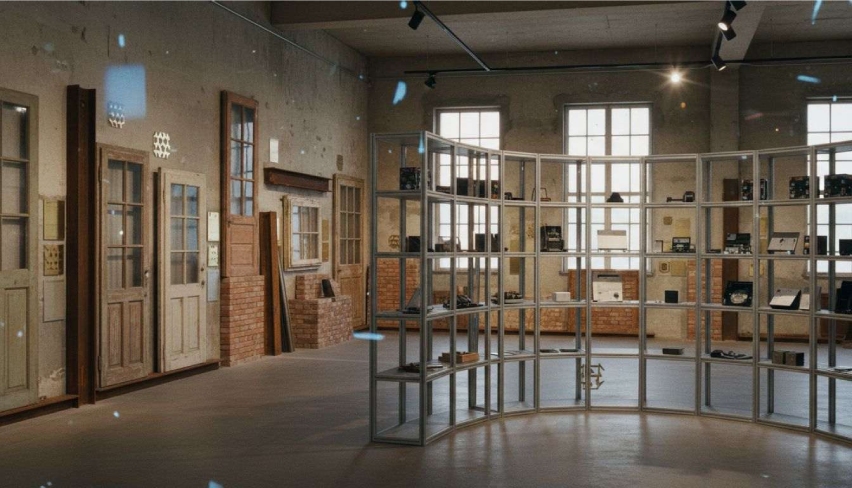
Parallel work in mineral urban mining pushes the logic further. Proposals like Spolia, developed for the UIA World Congress of Architects 2026, explore reusing large pieces of asphalt and concrete without crushing or separation, assembling them directly into modular retaining walls and structural elements.
This approach minimizes material processing, transport, and energy demand and reframes demolition rubble as prefabricated, large-format construction modules rather than raw waste.
IV. From Pilot to Practice: Making Circular Construction the Default
Technical possibilities alone will not deliver a circular built environment. The transition depends on regulation, finance, procurement, and new project delivery models.
1. Design for Disassembly: Future-Proofing Today’s Projects 🔩
Design for Disassembly (DfD) turns buildings into long-lived material banks.
Core design strategies include:
-
Using reversible connections – bolts, clips, screws – instead of permanent adhesives and welds.
-
Adopting modular prefabricated components that can be independently replaced or reused.
-
Selecting materials that can be separated without contamination, making recycling technically and economically feasible.
-
Ensuring component traceability via visible access and digital tagging.
Research on prefabricated concrete building deconstruction shows that DfD can enable multiple reuse cycles of major components, preserving embodied energy and carbon across several generations of use.
2. Modular and Prefabricated Construction: Waste as a Design Variable 🏗️
Modular construction is emerging as one of the most effective delivery models for circularity.
Across 59 analyzed building cases, adopting modular and prefabricated approaches reduced overall construction waste by an average of 78.8%.
Mechanisms include:
-
Precision manufacturing – factory settings allow exact material calculations, reducing offcuts and over-ordering.
-
Efficient waste management – any waste generated is more easily sorted and recycled in a controlled environment.
-
Material savings – optimized manufacturing can reduce material use by up to 20%
-
Energy reduction – prefabrication can cut energy consumption during construction by up to 67%, thanks to shorter schedules and more efficient factory energy use.
Coupled with DfD, modular systems become plug-and-play urban hardware, designed from the outset for future removal, reconfiguration, and reuse.
3. BIM and LCAs: Embodied Carbon as a First-Class Metric 📊
Integrating Building Information Modeling (BIM) with circular economy principles is rapidly becoming standard practice.
BIM supports:
-
Lifecycle management – centralizing design, construction, operation, and end-of-life data.
-
Material banking – linking geometric models to material passports and maintenance histories.
-
Deconstruction planning – visualizing recovery sequences and identifying salvageable components before construction even begins.
-
Embodied-carbon assessment – conducting early-stage LCAs to compare design options.
Industry surveys indicate that 31% of AEC professionals report achieving embodied-carbon reductions of up to 20% through construction LCAs, with more than 60% estimating reductions of at least 10% when such assessments are integrated early.
Regulatory momentum is reinforcing this shift. Several jurisdictions are now requiring whole-life carbon accounting as part of permitting:
-
France mandates life cycle (A–D) declarations, with dynamic embodied-carbon limits embedded in national regulation.
-
London’s 2021 Plan requires whole-life carbon assessment and reporting for major developments.
-
The European Union’s Digital Product Passport framework, coming into force for key construction products from 2026 onwards, requires standardized data on materials, sourcing, carbon footprints, recyclability, and compliance.
These policies make embodied carbon and circularity auditable metrics, not voluntary extras.
4. Market Incentives and Business Models 💰
Economic analyses highlight multiple value streams from circular construction:
-
Direct cost savings – local reuse and retrofit reduce material imports, logistics, and landfill fees.
-
Job creation – broad adoption of circular practices could create up to 45 million waste-management and circular-economy jobs by 2030, with more than 7 million net new jobs and 4.5 trillion USD in economic growth potential by 2030 across sectors.
-
Supply-chain resilience – localizing material flows reduces exposure to tariffs, geopolitical disruption, and commodity volatility.
-
Asset value enhancement – buildings with documented circular value (via passports) and lower embodied carbon can achieve higher valuations and lower obsolescence risk.
However, the transition also faces barriers:
-
Upfront cost premiums for deconstruction, additional sorting, and circular design detailing.
-
Certification gaps for reused components, which often lack standardized performance documentation.
-
Fragmented value chains where project-based, short-term contracts misalign incentives for long-term material value.
-
Time constraints, as deconstruction can take longer than demolition under conventional scheduling.
Emerging research points to circular business models – including material-as-a-service, take-back schemes, and urban-mining cooperatives – as key mechanisms for aligning returns with long-term material value and carbon performance.
5. Urban Mining on the Global Stage: UIA 2026 and Beyond 🌐
The UIA World Congress of Architects 2026 in Barcelona is dedicating a major program to “Mineral – Architectures of Urban Mining”, with a total budget of 336,000 EUR to prototype and test circular-material strategies in real projects.
Winning proposals illustrate how design culture is shifting:
-
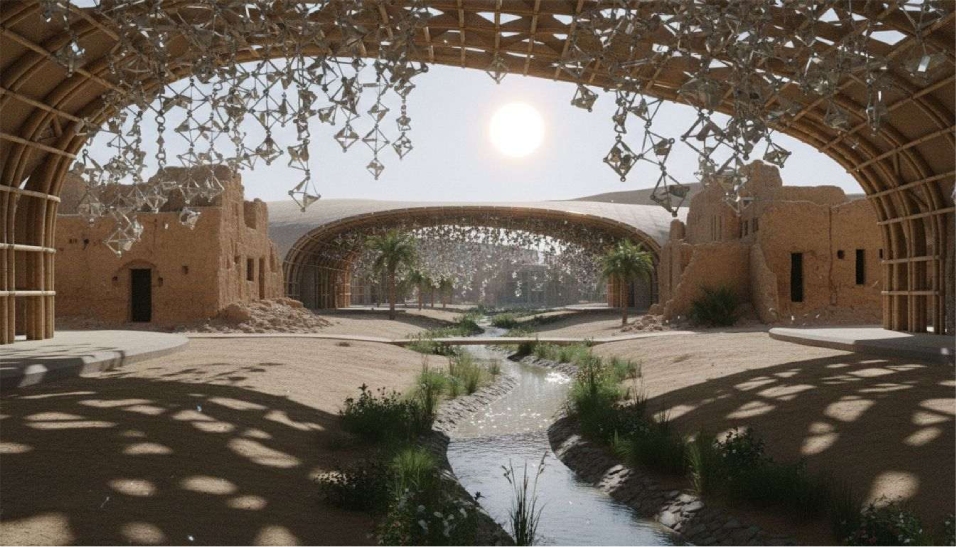
Spolia (Baukunst with Structural Xploration Lab, EPFL) proposes the direct reuse of large mineral waste pieces—primarily asphalt and concrete—without separating or transforming them into smaller aggregates. These elements are recomposed into large-format modular systems such as retaining walls and infrastructural landscapes, drastically reducing processing emissions.
-
Grounded Futures (BC Materials, BC Architects, BC Studies) develops new building materials from crushed mineral waste mixed with a natural seaweed-based binder, experimenting with multiple product typologies to reintroduce these composites into public spaces.
Both projects will undergo on-site pilots in Barcelona in 2026, monitored for at least a year before being showcased at the Congress, creating a high visibility living lab for urban mining and circular construction.
These initiatives signal that urban mining is moving from research papers into mainstream architectural discourse and procurement.
Conclusion: From Linear Liabilities to Circular Assets
The circular transformation of the built environment is no longer a speculative future; it is already being quantified, financed, and prototyped across multiple scales.
The core signals are clear:
-
The circular economy in construction represents a 4.5 trillion USD opportunity by 2030 and could help eliminate 9.3 billion tons of CO₂ by 2050.
-
With 80% of 2050’s building stock already in place, retrofit, adaptive reuse, and material recovery are the most impactful levers for decarbonization.
-
Circular building pathways can reduce sector emissions by up to 75% by 2050 relative to a business-as-usual, new-build-centric model, especially when paired with decarbonized cement, steel, and aluminum.
-
50% of materials removed during retrofits between 2023 and 2050 could be recirculated, representing a 600 billion USD opportunity in 2050 alone.
At the same time, emerging materials – from self-healing concrete and transparent wood to hempcrete, recycled plastic composites, and carbon-negative bricks – are extending building lifespans and shrinking embodied-carbon footprints.
Digital infrastructure is catching up: material passports, BIM, LCAs, and digital twins are turning buildings into traceable, auditable material banks, while regulatory frameworks in France, London, and the EU make whole-life carbon a formal design constraint rather than a voluntary target.
The construction sector now stands at a pivotal inflection point:
-
Persist with a linear, demolition-driven model, and lock in decades of overshoot, stranded assets, and escalating material risk.
-
Or embrace a circular, retrofit-first model, turning existing buildings into the foundation of a low-carbon, resilient, and regenerative urban economy.
The tools, data, and precedents are here. What remains is to treat circularity not as a side initiative but as the organizing logic of the built environment. 🌀