
The Regenerative Strategist
Welcome and thank you for reading The Regenerative Strategist. A weekly update on harnessing the power of decarbonization, digitization, and enhanced data collection, delivering buildings of the future powered by renewable energy & automation.
Want to stay informed?
Subscribe to this series using the button above and let us know what you want to hear about next week using #UrbanAO in the comments below.
Introduction
Here is the aesthetic inversion that should fundamentally change how architects, developers, and clients define beauty itself:
🎨 For over a century, architecture optimized for concealment: hidden fasteners, pristine surfaces, permanent connections. Now, the most progressive practices are celebrating constraint—visible bolts signal disassembly potential, weathering becomes protective patina, salvaged irregularity tells stories virgin materials cannot match.
💰 90% of consumers say brand authenticity is important when making purchase decisions, and 73% are willing to pay more for products they view as authentic, according to 2024 branding research and PwC’s Global Voice of Consumer Survey.
🌍 40% embodied carbon reduction is achievable through adaptive, low-intervention design strategies that embrace material aging rather than resist it, per World Green Building Council studies cited in contemporary wabi-sabi urban design research.
💎 9.7% average sustainability premium: consumers will pay this much more for sustainably produced goods, with 80% of global consumers willing to pay more specifically for sustainable products, according to PwC’s 2024 Voice of Consumer Survey.
For more than a century, architectural beauty has been defined by perfection: flawless finishes, uniform materials, connections hidden behind seamless panels – think Sir Norman Foster. This aesthetic served industrial mass production well but fundamentally conflicts with circular economy principles requiring disassembly, adaptation, and multiple material lives.
A profound shift is now underway. Emerging from Japanese philosophical traditions (wabi-sabi, kintsugi), validated by contemporary built projects (Triodos Bank, Tate Modern, Studio8’s Matterpieces), and increasingly demanded by consumers, a new aesthetic celebrates what modernism concealed. Exposed bolts become markers of adaptability. Weathering steel’s rust acts as functional patina. Each salvaged timber’s irregularity becomes a premium feature—traceable provenance that new materials simply cannot offer.
This is not “making do with less.” It is the recognition that constraints have always been creativity’s catalyst. Legendary architects from Carlo Scarpa to Diébédo Francis Kéré built masterpieces by working within material limits, not despite them. The difference now is that planetary boundaries join budget, site, and gravity as fundamental design constraints—and the aesthetic language adapting to those constraints is becoming the premium choice, not the compromise.
The Triodos Bank headquarters in Zeist, Netherlands, exemplifies this shift: 165,312 exposed high-quality bolts (zero welding or gluing) make disassembly logic legible as design feature. Studio8’s Matterpieces transforms construction debris into premium cladding that showcases rather than conceals material origins. REVOLVE Magazine’s 2024 analysis argues that circular economy creates “a whole new aesthetic, one of resilience and adaptability” where beauty lies not in fixed form but in potential for change.
This edition explores the aesthetic of availability across four dimensions:
1️⃣ Philosophical Foundations – wabi-sabi, kintsugi, and the cultural shift toward embracing imperfection.
2️⃣ Material Honesty and Patina – how weathering, texture, and aging become designed transformation rather than defects.
3️⃣ Visible Reversibility – design for disassembly as aesthetic language and quantifiable performance metric.
4️⃣ Market Validation – consumer behavior data, premium positioning, and the business case for authenticity.

I. Philosophical Foundations: Ancient Wisdom, Contemporary Urgency
1. Wabi-Sabi (侘び寂び): Finding Beauty in Impermanence
Wabi-sabi is a Japanese aesthetic philosophy rooted in Zen Buddhism that celebrates imperfection, impermanence, and incompleteness. As documented in contemporary design research published in 2024-2025, wabi-sabi centers on three core principles:
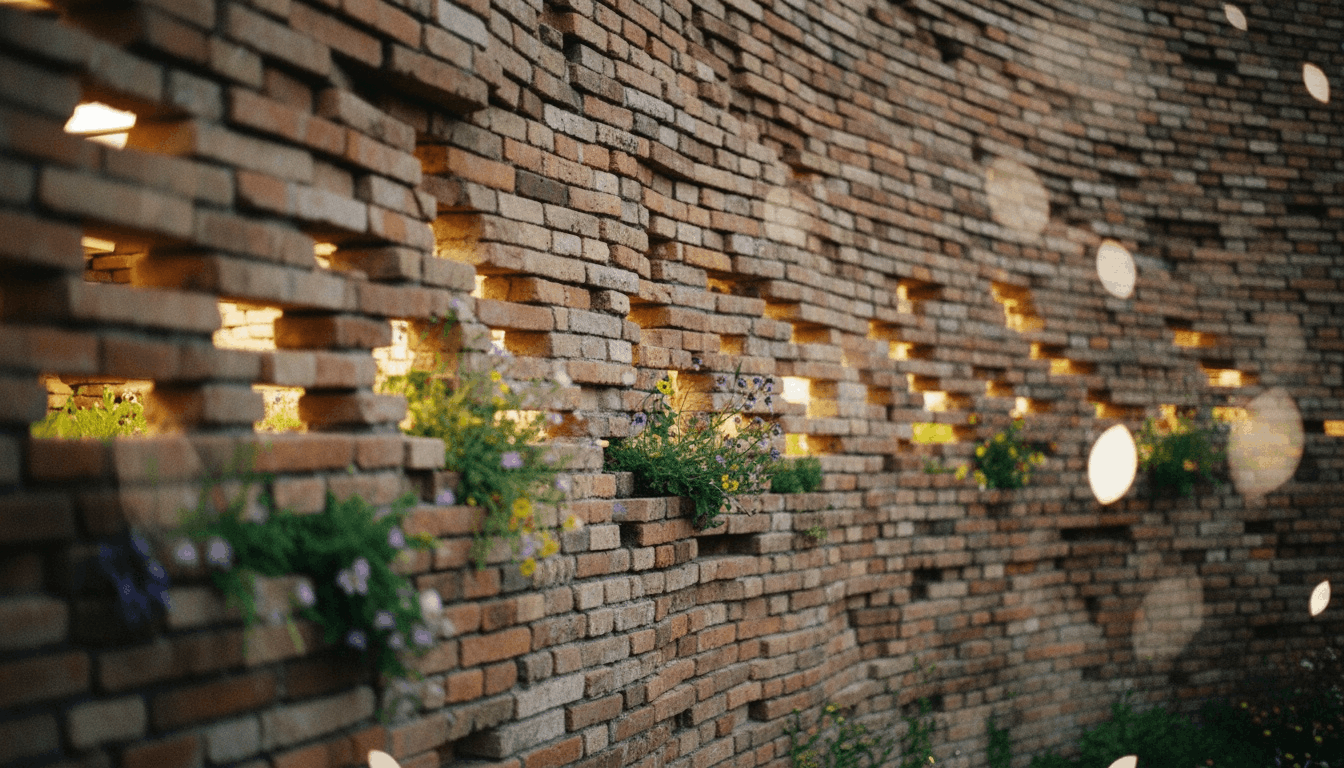
Imperfection (不完全): Irregularity, asymmetry, and flaws as marks of uniqueness and authenticity. A 2024 analysis by Mainifesto notes that “in an era defined by digital precision and algorithmic perfection, wabi-sabi has found renewed resonance.” The philosophy rejects uniformity in favor of celebrating each object’s distinct character—handmade raku ceramics with visible firing marks, tables polished by countless hands, walls that age differently based on their microclimate.
Impermanence (無常): The transient nature of life; beauty discovered in aging, weathering, and decay. Historical scholarship on wabi-sabi origins describes how “sabi originally described the natural progression of aging and the beauty of decay… the patina on metal, cracks in a ceramic bowl, the weathering of wood that tell stories of time,” as documented in 2024 design research by Laboo Studio and Zen Art Gallery.
Incompleteness: Valuing unfinished, evolving states rather than fixed perfection. Buildings are never “complete” but continuously adapting to their occupants, climate, and context.
Contemporary Architectural Application: Architect Fernanda Canales in Mexico City uses “volcanic stone, raw stucco, unsealed wood” in her projects, creating “architecture that accepts tropical climate’s effects—stains, moss, fading pigments—as part of its evolving identity,” according to 2024 research on wabi-sabi city nooks published by Mainifesto. Rather than power-washing surfaces to maintain pristine appearance, the design embraces environmental marks as character development.
Sustainability Link: The same research cites World Green Building Council studies showing that “adaptive, low-intervention design strategies can reduce embodied carbon by up to 40%.” A weathered concrete wall becomes “a manifesto for sustainability—proof that endurance can be beautiful.” By eliminating maintenance cycles (refinishing, re-cladding, replacement), buildings that age gracefully dramatically reduce lifecycle carbon.
2. Kintsugi (金継ぎ): Repair as Value Creation
Kintsugi—literally “joining with gold”—is the 15th-century Japanese art of repairing broken ceramics with lacquer mixed with precious metals. As documented in 2024 research by Isonomia and distributed design platforms, the practice originated when Shogun Ashikaga Yoshimasa rejected Chinese stapled repairs for a broken tea bowl and demanded an aesthetic solution. Japanese craftsmen created kintsugi, which “became so popular that collectors took to purposefully smashing ceramics just to have them repaired in kintsugi style,” according to historical research published in 2024.
Philosophical Core: REVOLVE Magazine’s 2024 circular economy analysis explains that kintsugi works by “drawing attention to the mend with precious material, creating beauty out of apparent imperfection… turning something beautiful because of its flaws instead of despite them.” The repair marks are not concealed but celebrated—often making the repaired object worth more than the pristine original.
Circular Economy Application: Contemporary research by distributed design platforms notes that “transitioning to a model where product lifetimes are extended through repair requires challenging links between newness, perfection and value.” Kintsugi provides cultural precedent for this shift.
Business Model Evidence: Companies like Sony and Caterpillar have integrated repair and remanufacture as core business strategies. As 2024 research on Japanese ceramics and circular economy published by Isonomia documents: “Remanufactured products can perform better than new products because they receive higher levels of attention and stringent testing.” A remanufactured item “accrues value through its history… undergoes ‘double-making.'”
Repair Culture Proliferation: Denmark Design Centre’s 2024 research notes: “We see more repair cafés popping up in cities worldwide.” The European Commission’s 2022 overview of Europe’s repair sector documents that the repair industry creates local added value, local jobs, and promotes vocational training while providing affordable access to products for low-income communities.
3. Adaptive Reuse: Layered Histories as Design Narrative
The principle of visible traces of age as design narrative has been codified in contemporary adaptive reuse practice, as documented in 2024 research published in Taylor & Francis journals on adaptive reuse design strategies.
Tate Modern Case Study (Herzog & de Meuron, 2000): The conversion of Bankside Power Station employed a strategy of “amplifying potential by adding the least architectural components” while “giving overall uniformity to old and new elements instead of contrasting them,” according to research on the project’s adaptive reuse methodology. The design method, termed “aemulatio,” involves “attempts to surpass the original aesthetically and functionally… old and new elements integrated through the architect’s interpretation of materials, lights, color, and scale.” The result: “multi-layered spaces… integrating and manifoldly dualistic: old/new, exterior/interior, architecture/landscape.”
Kaikukatu 3 Renovation (Finland, 2023): This project explicitly draws from kintsugi philosophy. As documented in 2023 research by Finnish architecture platform Olla: “Repair marks are not hidden but become a visible part of the object’s new character. Kintsugi makes repairing beautiful.” The implementation strategy: “The difference between new and old is allowed to be distinguishable… conserve materials as much as possible; new materials are carefully selected to complement rather than disguise old.”

II. Material Honesty and Patina: The Performance of Aging
1. Raw Aesthetics and Texture Celebration 🎨
A movement researchers’ term “raw aesthetics” has gained momentum, defined in 2024 design research by Marnois as “celebration of texture… showcasing materials in their purest form… inherent textures and imperfections celebrated.” This represents a deliberate departure from precision manufacturing’s uniform finishes.
Material Palette and Characteristics: Contemporary research on texture’s impact on building design, published by Architecture Helper in 2024, documents that raw aesthetics embraces:
🏗️ Concrete: Board-formed, retaining wood mold imprints and surface irregularities
🗿 Stone: Rough-hewn rather than polished, showing quarry marks and natural fractures
🌲 Wood: Unsealed, displaying grain variation, knots, and dimensional changes with humidity
⚙️ Metal: Oxidized rather than coated, developing protective patinas
Contrast as Design Strategy: The same architectural research notes that “contrast between materials—the smoothness of marble versus the roughness of brick—adds visual and tactile interest.” Juxtaposition amplifies each material’s distinct character rather than homogenizing surfaces.
Dynamic Performance: ☀️ Research documents that “texture changes appearance throughout the day as light shifts, creating dynamic visual effects.” Low-angle sunrise and sunset light “creates long shadows highlighting surface details,” while direct midday light “flattens these features.” Deeply textured salvaged materials perform differently across day and season—variability becomes richness rather than inconsistency.
2. Weathering as Designed Transformation 🌍
Contemporary practice specifies materials that age beautifully, treating transformation over time as designed performance rather than degradation. Architizer’s 2024 research on patina-dominant projects documents this shift:
Weathering Steel (Corten): REVOLVE Magazine’s 2024 analysis explains that weathering steel “oxidizes to a stable protective layer”—the rust is functional patina, not failure. Architizer’s research notes that architects “embrace patina to mark time’s passing and buildings’ interactions with nature… rather than masking effects of aging, patina enhances character, adding texture and depth.”
Copper: Research on material aging by Architecture Helper documents that copper “transitions from bright orange to deep green” through oxidation. This green patina becomes the signature aesthetic celebrated in historic architecture from cathedrals to statuary.
Wood: Unsealed timber “fades to silvery-gray, blending beautifully with surroundings,” according to the same architectural materials research. Rather than fighting weathering through constant refinishing, designers specify wood knowing it will evolve with climate.
Concrete: Mainifesto’s wabi-sabi urban design research notes that raw concrete “accepts staining, moss growth as character.” Rather than pressure-washing to pristine condition, architects design knowing concrete will absorb environmental marks.
Functional Benefits: ✨ Architizer’s 2024 research emphasizes that “patina acts as a form of natural preservation, protecting underlying materials from further decay.” The rust layer on weathering steel prevents deeper corrosion; copper’s green oxide arrests further oxidation.
Maintenance Elimination: 🌱 By accepting aging as designed transformation, buildings eliminate refinishing cycles. This directly supports the documented 40% embodied carbon reduction from low-intervention strategies.
3. Studio8 Matterpieces: Construction Debris as Premium Material ♻️
Studio8’s Matterpieces initiative, documented in 2025 design research by Design Wanted, exemplifies how constraint-driven material sourcing becomes premium aesthetic strategy.
Innovation: Transforming construction and demolition waste into high-quality architectural finishes. The design philosophy centers on “the aesthetic potential of reclaimed materials” as primary methodology rather than afterthought.
Product Lines:
🏢 Matterpieces Standard: General C&D waste from waste management companies transformed into cladding, “showcasing the inherent beauty of construction waste through textures designed for floors, wall cladding, furniture, and countertops,” according to the Studio8 research documentation.
💎 Matterpieces Exclusive+Service: Site-specific demolition waste becomes unique products “celebrating the geological history of buildings”—rather than anonymous aggregate, materials carry biography of their origin structures.
Aesthetic Approach: Textures reveal material provenance; variations become features rather than defects requiring concealment. Each tile or panel tells a distinct story, creating architectural surfaces impossible to replicate with virgin materials.
📈 Scale Achievement: The initiative has moved from “kilos to tonnes” through industrial partnerships, demonstrating that salvage-driven aesthetics can achieve commercial viability at architectural scale.
4. Pretty Plastic: Variability as Value Proposition 🎯
The Tongelreep National Swimming Centre renovation in the Netherlands, documented in 2024 sustainable material research by Material Source, demonstrates salvage aesthetics in high-profile public architecture.
Material Source: 🔄 100% recycled PVC cladding derived from discarded window frames and drainpipes transformed into “commercially ready building material.”
Aesthetic Strategy: “Twelve different colours and three distinct designs… each holds its own unique character and qualities”—no two tiles are identical. Rather than processing salvaged PVC into uniform product, variability is showcased as premium feature. 🌈
Performance: 🏆 The project proves that salvage-based cladding can achieve architectural quality in demanding public contexts—humidity, chemical exposure, public scrutiny—while celebrating rather than concealing material origins.
III. Visible Reversibility: Design for Disassembly as Aesthetic Language
1. Mechanical Connections Become Design Features
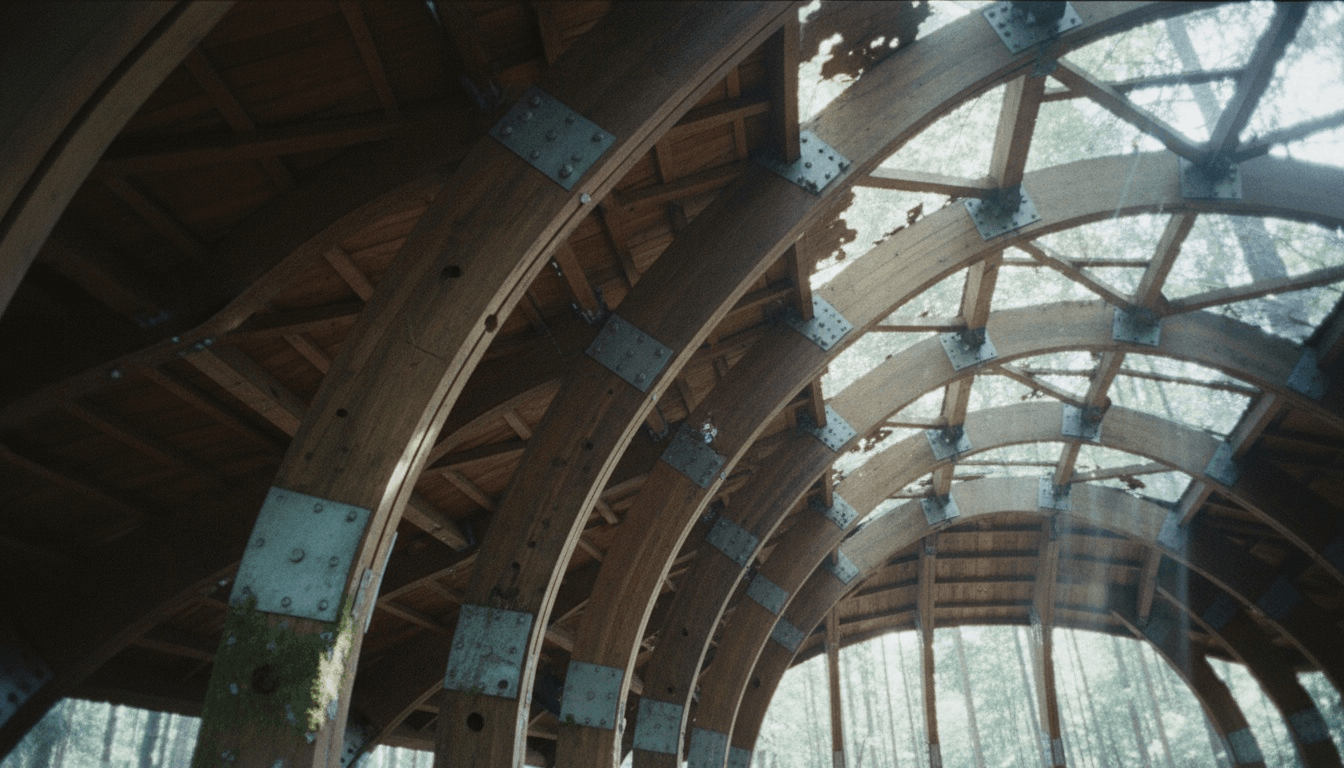
Technical Necessity: Design for disassembly mandates reversible mechanical connections—bolts, clips, screws—over permanent assemblies like welds, adhesives, or poured concrete. This requirement, documented across 2024-2025 DfD research in construction journals, creates an aesthetic opportunity.
The Aesthetic Debate: Research on modern wall paneling by Fastmount notes that “traditional methods like visible screws, nails, or Z-clips can undermine carefully designed modern paneling,” with hidden fasteners achieving “sleek, uninterrupted finish.” This represents the minimalist tradition prioritizing concealment.
The Circular Counter-Position: REVOLVE Magazine’s 2024 circular economy aesthetics research argues that “visible steel connectors… modularity and material history become a central feature of design.” Exposed bolts signal disassembly potential; connection points become “markers of structure’s adaptability” where “beauty lies not in fixed form but in potential for change.”
Resolution Strategy: Precision-engineered reversible connections as honest expression of modularity. Research on visible mechanical fixing systems by Aximer documents that clips for porcelain/ceramic facades can be “color-matched to tiles for harmonious appearance or intentionally contrasted for modern design statement,” elevating utilitarian hardware to sculptural design element.
2. Triodos Bank: 165,312 Bolts as Design Philosophy
Project: Triodos Bank headquarters, Zeist, Netherlands (RAU Architecten, 2019)—world’s first fully demountable bank building with comprehensive material passport.
Scale: 5 stories, 12,994 m² gross floor area; 1,615 m³ glued laminated timber (GLT), 1,008 m³ cross-laminated timber (CLT), 5 whole tree trunks as sculptural elements.
Aesthetic Strategy: Complete disassemblability as visible design language. Research documentation via Madaster platform and Detail magazine archives shows:
- 165,312 high-quality bolts; zero welding or gluing—every connection reversible
- Connections exposed rather than concealed—modularity legible throughout
- Timber dimensions “dictated by available GLT/CLT production sizes,” making stock constraints visible design driver
- Facade grid 3.60m modular despite amoeba-shaped plan
Material Passport Integration: Every component catalogued via Madaster platform as “organized material depot for future harvest.” The building is conceived not as permanent artifact but as temporary configuration—materials will retain value after original use expires.
Economic Outcome: Client (Triodos) explicitly values residual material worth—treating building as investment that retains monetary and environmental value across multiple configurations.
3. Quantifying Disassembly Potential
Recent research has developed rigorous metrics for evaluating disassembly aesthetics. A 2025 study published in Taylor & Francis journals by Ottenhaus et al. on evaluating disassembly potential of timber buildings documents a comprehensive framework:
Key Evaluation Criteria (stakeholder surveys of construction professionals established weightings):
- Access: Ease of reaching connection points without damaging adjacent systems
- Hazard: Safety requirements for disassembly operations
- Damage: Likelihood of component damage during removal
- Number of Fasteners: Fewer fasteners score higher on disassembly potential
- Type of Connection: Bolts rank highest, followed by screws, nails, adhesives, then welds
Disassembly Potential Score (0-100 scale): The timber building research found that “factors such as ‘Access,’ ‘Hazard,’ and ‘Damage’ were critical” in determining whether components could be economically recovered.
Design Application: The assessment tool enables architects to compute disassembly potential during early design phases, optimizing for future material recovery. Buildings scoring high on disassembly metrics typically have visible, accessible connection points—which, when embraced rather than concealed, become aesthetic features signaling circular value.
4. BAMB Framework: Transformation Capacity and Reuse Potential
The Buildings as Material Banks (BAMB) European research consortium developed quantitative indicators for reversible building design, documented in 2019 research reports on reversible building strategies:
Two Key Performance Indicators:
Transformation Capacity: Spatial adaptability—can the building accommodate new functions without demolition? Measured through assessment of functional independence of building parts, hierarchical organization, and spatial flexibility.
Reuse Potential: Technical reversibility—can components be recovered without damage? Scored on 0-1 scale where values above 0.7 indicate direct reuse viability with minor repair, 0.4-0.6 indicates reuse requiring major remanufacture, and below 0.3 indicates recycling only (material level, not component level).
Design Strategies for High Scores: The BAMB research documents specific tactics:
- Independence of Parts: Functional design separating systems (structure, envelope, services) so one can change without affecting others
- Exchangeability: Hierarchical connection design enabling component removal and replacement without cascading effects
- Accessible Connections: Junction points visible, reachable, documented
Aesthetic Outcome: Buildings achieving high transformation capacity and reuse potential scores exhibit layered, legible systems where technical independence is visually expressed—modularity becomes architectural language.

IV. Market Validation: Authenticity as Premium Positioning
1. The Authenticity Premium 🎨
PwC’s 2024 Voice of Consumer Survey reveals the economics of circular aesthetics:
💰 9.7% sustainability premium consumers will pay + 80% willing to spend more on sustainable products
🔍 90% say authenticity matters for purchase decisions; 73% pay premium for it
⭐ 99.5% read reviews; real-world usage experiences boost conversion 25%
Why This Matters: Material provenance, repair history, and salvaged origins deliver the authenticity consumers will pay for. As REVOLVE Magazine documents: “Objects using reused materials have traceable history new materials cannot match—elevating ‘reused’ into premium design feature.”
2. Repair Economics & Local Job Creation 🔧
European Repair Sector (2022):
- ✅ Local added value through SMEs
- ✅ Vocational training and skill distribution
- ✅ Affordable access for low-income communities
Right to Repair Impact (2024-2025):
- 💶 €12 billion annually in avoidable replacement costs (EU)
- 📈 Labor-intensive, creating skilled local jobs resistant to automation
- 📊 Subsidies increase both demand and profit simultaneously (Journal of Cleaner Production)
3. Salvage as Premium Design 🎭
2024 Design Awards (STIR Magazine) celebrate constraint-driven aesthetics:
- Benjamin Foucaud (“Not as Planned”): Flea market finds → vases celebrating imperfection
- Audrey Guimard (“Fragments”): Cracked tufa stone → totems; “decay as inspiration”
- Yuxuan Huang (“Lost Stories”): Deconstructed furniture retaining “marks of usage” as central feature
- Rebecca Appleby (“Stela”): Demolition debris → sculptures; “buildings are sites that hold memories”
The Shift: From “recycling as obligation” to “salvage as design language”—constraint becomes investment-worthy. 🏆
4. Carbon & Performance Metrics 📊
World Green Building Council Research:
- ♻️ 40% embodied carbon reduction through low-intervention adaptive reuse
- 🏗️ 50-75% carbon savings preserving structural frames vs. demolish-rebuild
- 💰 $600 billion materials recoverable from 2050 retrofits; 50% recirculation potential
Material Innovation:
- 🔬 Self-healing concrete: 200-year lifespan (vs. 50-100), 75% lower carbon
- 🔩 Design for disassembly: 80% material recovery vs. 15-25% conventional demolition
5. Material-as-Service Business Models 🔄
Kintsugi Economics: Repaired items command higher prices than pristine originals—repair history adds value, not diminishes it.
Remanufacture Premium: “Remanufactured products perform better due to higher attention and testing” (Isonomia, 2024). Sony and Caterpillar embed repair as core strategy, not afterthought.
Triodos Bank Model: Components leased by manufacturer across multiple building configurations—value retained through service contracts, not single sale.
Take-Back Schemes: “Aesthetic appeal and durability become selling points for repeated use and circulation” through subscription/buy-back programs.
Bottom Line: The circular aesthetic is not compromise—it’s premium positioning. Authenticity commands 9.7% premiums, repair creates local skilled jobs, salvage designs win awards, carbon metrics justify structural over-capacity, and material-as-service models extend profitable lifecycles indefinitely. 🌍✨
Conclusion: Constraint as Beauty’s Truest Source
Constraint catalyzes creativity. 🎨 Scarpa, Kéré—legendary architects thrived within material limits. What’s new: planetary boundaries join budget, site, and gravity as design constraints. And this aesthetic isn’t compromise—it’s becoming the premium choice.
The Evidence
🧠 Philosophy: Wabi-sabi (imperfection) + kintsugi (repair as value) = circular aesthetics grounded in centuries-old wisdom, not new ideology.
🏗️ Practice: Triodos Bank (165,312 exposed bolts), Studio8 Matterpieces (debris as premium), Tate Modern (layered histories)—proof that constraint-driven design achieves institutional quality.
💰 Market: 90% value authenticity. 73% pay premiums. 9.7% sustainability surcharge. Traceable material provenance outsells virgin materials.
🌍 Performance: 40% embodied carbon reduction (low-intervention strategies). 50-75% savings (adaptive reuse). $600B recoverable from retrofits by 2050.
The Inversion
Modernism: perfection through concealment.
Circular design: potential through visibility.
Exposed bolts signal disassembly. Weathered steel rusts protectively. Salvaged timber irregularity tells unique stories.
We cherish buildings that age gracefully—not pristine ones. A weathered concrete wall: “manifesto for sustainability.” A kintsugi-inspired renovation: depth through visible repair, not erasure.
The Shift
Environmental responsibility transforms from obligation → aspiration when:
- Material provenance becomes premium positioning ✓
- Repair history increases value ✓
- Constraint generates beauty ✓
The brief is no longer perfection. The brief is potential: transformation, repair, multiple lives, honest aging, honest making.
Design for that potential. Create architecture with the quiet dignity of materials shaped by time, resilience of systems designed for change, and authenticity consumers pay 9.7% more to inhabit. 💎
Beauty’s foundation is shifting: pristine → patinated, fixed → flexible, concealed → celebrated. 🔄
Constraint isn’t limitation. It’s the source. ⚡
Final Thoughts
If you want to talk over your options, click here to schedule a time to chat with our Managing Director Joe MacDonald see how we can help you revolutionize global project development, management, and delivery.
If you enjoyed The Regenerative Strategist edition, I have a quick favour to ask:
- Subscribe to The Regenerative Strategist with the button at the top of this post so you don’t miss a single #urbanao post.
- Share this post with your network on LinkedIn if you think they could benefit from the message using the Share button below.